Cooktops
KitchenAid cooktop repair guide for San Francisco homes with common symptoms, safe owner checks, model identification, service planning, and repair resources.
Cooktop · in-home diagnosis
KitchenAid service. Model-aware diagnosis. Approval before repair work.
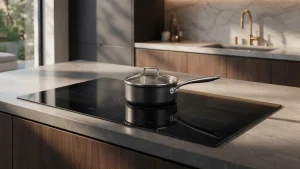
Gas, radiant-electric, and induction cooktops require different diagnostic branches. Do not transfer one technology’s checks to another. Induction heats the pan through the glass, radiant-electric uses a heating element beneath the surface, and gas relies on an igniter and burner, so no heat means something different on each.
A useful service request starts with the complete model number, the exact symptom, when it appears, and any code or message on the display. Similar outward symptoms can come from different systems, so a complaint is not converted into an automatic parts recommendation.
These are service reasons, not failure-rate claims. The exact model, configuration, operating stage, and installation determine what is actually tested.
Owner-level checks should remain external, reversible, and consistent with the exact model’s documentation.
Do not remove protected panels, bypass interlocks, probe live circuits, adjust gas pressure, open a sealed refrigeration system, or access protected high-energy components as a homeowner troubleshooting step.
Stop normal use and address the safety condition when:
If a code or message is present and there is no immediate safety issue, photograph it before acknowledging or clearing it.
A technician can use the symptom, model information, and verified code context to test the affected system instead of replacing the first part associated with a generic complaint.
Diagnosis should confirm the failed condition before parts are ordered or installed. On a gas model, clicking shows the igniter is being triggered, not whether flame is sensed or gas reaches the burner, so those steps are tested separately.
KitchenAid uses different controls, components, configurations, and diagnostic logic across appliance families and model generations. Send the complete model number from the rating label. The number tells the technician whether the cooktop is gas, radiant, or induction, and which control interface it uses.
Use the KitchenAid model directory to find a model reference. If the appliance shows a code, use the KitchenAid error-code library only for a code guide that matches the correct appliance family.
Send the complete model number, exact symptom, any displayed code or message, your San Francisco service ZIP code, and relevant access details.
No. A symptom or error display identifies a diagnostic direction. Model-specific testing should confirm the cause before a replacement part is selected.
Only when there is no safety concern and continued use is appropriate. The stop-use conditions above take priority.
Appointment and part availability can vary by appliance, model, diagnosis, and service coverage.
KitchenAid cooktop repair guide for San Francisco homes with common symptoms, safe owner checks, model identification, service planning, and repair resources.
C81 and C83 mean the cooktop overheated and shut a cooking area off. Check airflow below the cooktop, wait five minutes, then reset power.
C82 means the pan is the wrong size or is empty or dry. Match the pan to the cooking area, wait five minutes and reset power if needed.
dE means demo mode: the cooktop powers up but does not heat. KitchenAid's help pages describe a Booster-key press to change the mode.
F0 and E_03 mean an object, liquid or soil is putting pressure on the cooktop control panel. Clean the panel and reset power.
F03, F13 and F22 point to an internal communication error on the touch control module. One F12 article says something different.
F0E4 is listed as a touch control module communication error on electric cooktops. The induction article only says to disconnect power and call service.
KitchenAid coffee machine repair in San Francisco with model-aware diagnosis, safe owner observations, clear service planning, and practical repair guidance.
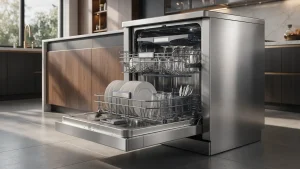
KitchenAid dishwasher repair in San Francisco with model-aware diagnosis, safe owner observations, clear service planning, and practical repair guidance.
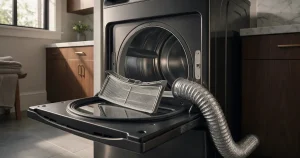
KitchenAid dryer repair in San Francisco with model-aware diagnosis, safe owner observations, clear service planning, and practical repair guidance.
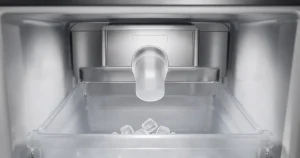
KitchenAid ice maker & beverage center repair in San Francisco with model-aware diagnosis, safe owner observations, clear service planning, and practical.
KitchenAid microwave repair in San Francisco with model-aware diagnosis, safe owner observations, clear service planning, and practical repair guidance.
KitchenAid range hood & ventilation repair in San Francisco with model-aware diagnosis, safe owner observations, clear service planning, and practical repair.
KitchenAid range repair in San Francisco with model-aware diagnosis, safe owner observations, clear service planning, and practical repair guidance.
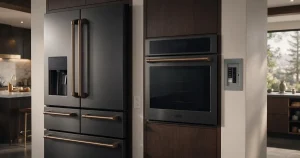
KitchenAid refrigerator repair in San Francisco with model-aware diagnosis, safe owner observations, clear service planning, and practical repair guidance.
KitchenAid stand mixer repair in San Francisco with model-aware diagnosis, safe owner observations, clear service planning, and practical repair guidance.
KitchenAid trash compactor repair in San Francisco with model-aware diagnosis, safe owner observations, clear service planning, and practical repair guidance.
KitchenAid wall oven repair in San Francisco with model-aware diagnosis, safe owner observations, clear service planning, and practical repair guidance.
KitchenAid warming drawer repair in San Francisco with model-aware diagnosis, safe owner observations, clear service planning, and practical repair guidance.
KitchenAid washer repair in San Francisco with model-aware diagnosis, safe owner observations, clear service planning, and practical repair guidance.
Share a few details and we’ll confirm an appointment. Prefer to talk? Call us and we’ll help right away.